
It seems like every time I fly, I always run into one or two airport staff who are surprised I am traveling by myself. “Are you traveling with anyone?” is a question I get from many TSA agents. Once, a flight attendant asked me if I needed her to wait for my parents to pick me up. She was speechless when I told her I had lived alone for many years.
Due to heightened airport security, I am careful what I say when dealing with the airport staff. Sometimes I want to come back with a snappy retort like, yes, I am traveling with Leroy Moore. Leroy has done groundbreaking advocacy at the intersection of disability rights, racial justice, and hip hop. I would love for other people with disabilities to drop his name to TSA agents, too. That might just get them curious enough to look up his name on their next lunch break.
But instead of hoping the staff gets my sarcasm, there may be other ways to encourage staff at airports (and in other industries) to see those with disabilities as capable of being independent through education and training.
I often encounter situations where I am surprised that people don’t grasp that I make my own decisions. For instance, a government agency that assists me with living independently never fails to offer to invite my parents to meetings about my services. That agency also asks to speak to my parents when they wish to know the quality of their services.
After complaining for two years about the program and requesting to talk to my parents, I got a call from the person running the survey. He explained that several parents got mad at the researchers for talking to their offspring without their knowledge, so that is why they decided to ask for them.
There’s a simple solution to the problem of asking to meet with a 39-year-old's parent that will appease both parties. Staff could be trained only to bring up the client's parents if they are A. a minor or B. under conservatorship.
Although it might sound like this issue is simply a pet peeve, I continue to feel the consequences of living in a society where some policymakers don’t view people with disabilities as independent. Recently California started a program that gives certain people with disabilities a budget to hire individuals to assist them with activities like daily living or teaching them yoga or how to use the computer. It used to be providers had to go through a lengthy approval process for the state to pay food their services.
While this program sounds great, California requires a person with a disability to pay $140 a month per service to a company to cut checks to the people assisting me. The money comes from the budget given to me by the state.
While this requirement might help some, others should have the option to forgo working with the company and be able to issue checks directly. I would rather sit through a class to learn how to do payroll instead of paying $300 for a company to do HR for two or three employees.
Ironically, it's easy to make policymakers and others understand how independent I am. I can count on two fingers the number of people who didn’t acknowledge my independence when I asked them to do so. Making someone understand that I am capable is some of the easiest work I have ever done as an advocate.
Although I understand that being a cis-gendered white man plays a role in how people perceive me, if more people with disabilities are demanded to be seen as capable of making decisions, society may see independence as the norm rather than the expectation.
Each time we tell a server that we can order for ourselves or a doctor that we can make our own decision, we contribute to making independence the main characteristic people associate with those with disabilities.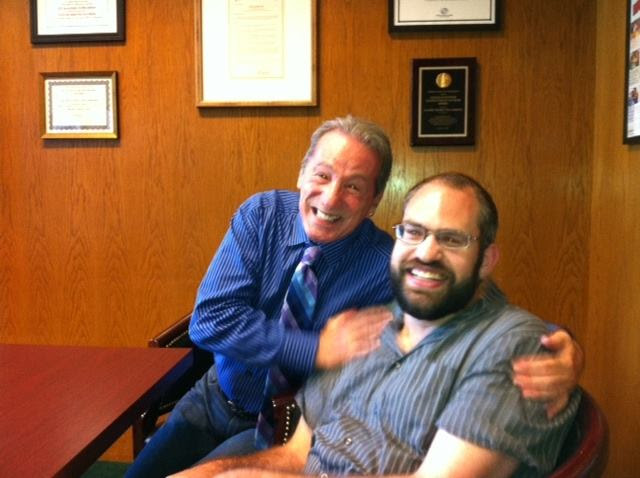
Photo of Jacob Lesner-Buxton talking to his God Uncle, former State
Assemblyman and LBGTQ rights activist Tom Ammiano, in his office
in Sacramento.